Fix Common Kratky Problems
Lesson 12 of 14
Most Kratky problems come from a short list of causes: the solution, the light, the temperature or the water level. Check those first before changing anything else.
Check these first
- Can the lowest roots still reach the solution?
- Is any light reaching the solution?
- Is the container warm to the touch?
- What are the nutrient strength and pH? (Lessons 6 and 7)
Symptoms and likely causes
- Wilting: roots cannot reach the solution, or the solution is too warm. Top up carefully (Lesson 10) or move the container somewhere cooler.
- Yellowing older leaves: often a weak solution or a shortage of nitrogen as the batch is used up.
- Pale new leaves with green veins: often pH running too high, which locks up iron (Greenhouse Grower, with Neil Mattson).
- Brown, dry edges on lettuce leaves (tipburn): linked to calcium not reaching fast-growing leaves, often in heat or fast growth (UMass Extension). Keep plants cooler and avoid pushing growth too hard.
- Brown, slimy, smelly roots: root rot. Usually warm solution, a light leak, or too little air because the container was overfilled. It is hard to save a badly affected plant; start again with a clean container.
- Green water or film: algae from light getting in. Cover or replace the container.
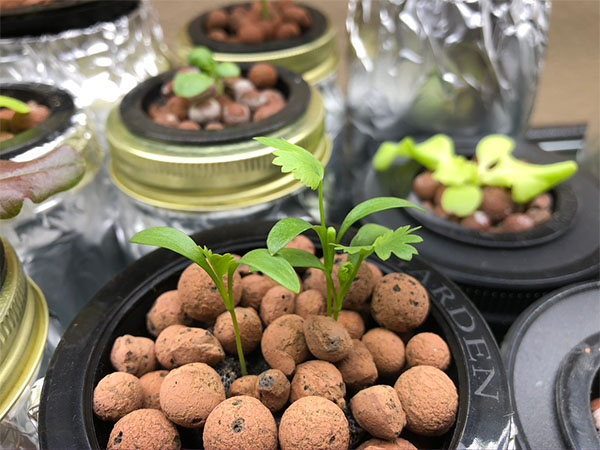
- Tall, floppy seedlings: not enough light (Lesson 9).
Keep notes
Write down the date, strength, pH and what you see. Patterns become obvious after a couple of crops.
Your task for this lesson
Compare your plant with this list during your weekly check. If nothing matches, you are doing it right.
Sources
- Greenhouse Grower, with Neil Mattson (Cornell University). Tips to Avoid Nutrient Issues in Greenhouse Lettuce.
- UMass Extension Greenhouse Crops and Floriculture. Hydroponic lettuce tipburn.